6 ways to celebrate indigenous culture at your next event
Events like NAIDOC Week and National Reconciliation Week are powerful opportunities for Australians to learn, recognise, and celebrate the history, cultures, and achievements of Aboriginal and Torres Strait Islander peoples. At JTPM we believe that recognition and celebration should not be reserved for a single week each year. It belongs in every event, all year round.
Where possible, we support and book Aboriginal and Torres Strait Islander owned and operated businesses and social enterprises for the events we produce. Depending on the size, scope, or location of the event, that is not always practical, but there are always meaningful ways to incorporate First Nations culture, people, and voices into what you are planning.
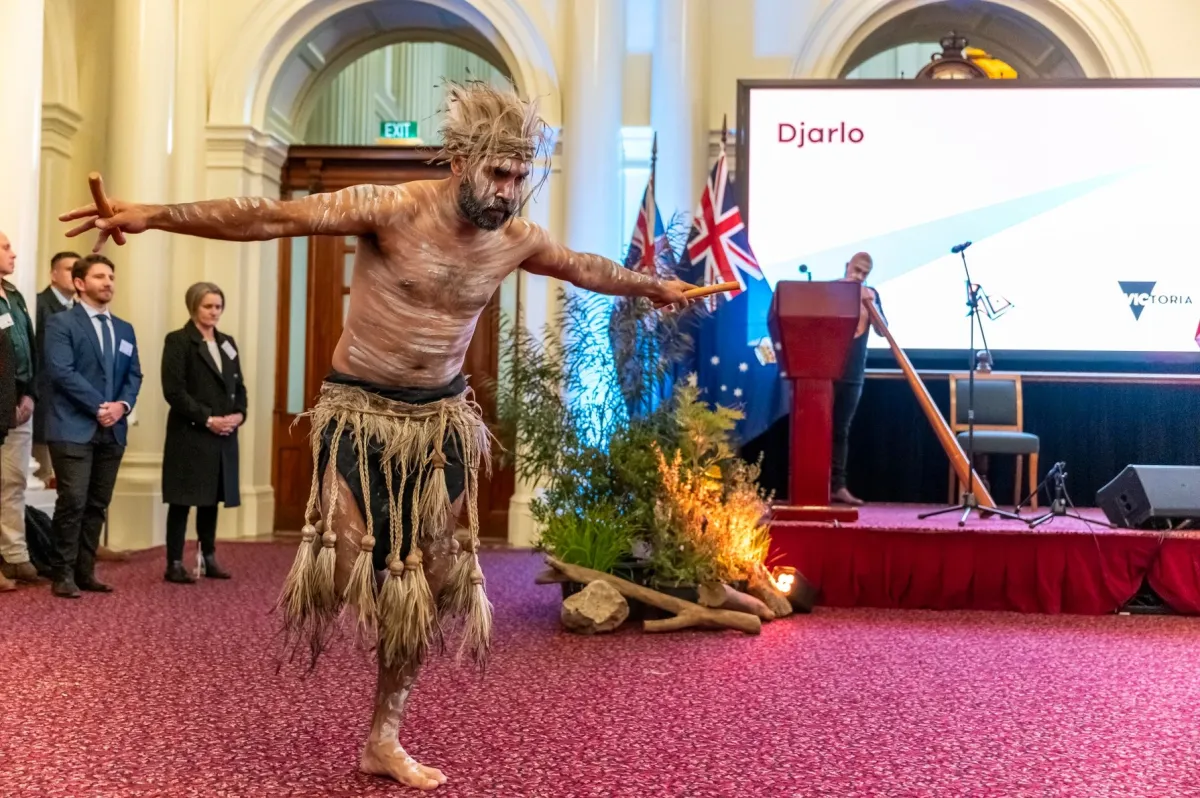
After delivering the NAIDOC Week State Government Reception at Parliament House (Wednesday, 5 July 2023), we shared some of the practical tips we now use to include Indigenous culture, people, products, and services into events of all sizes.
A note on this piece: this blog is written as a general guide only, drawing on JTPM’s experience of working with Indigenous people and communities. It is in no way intended to speak on behalf of, or instead of, a First Nations person. Our team continues to learn from Aboriginal and Torres Strait Islander people and will keep introducing further initiatives in direct consultation with the communities we work with.
1. Catering and suppliers
Food and drink are a great way to immerse guests in local cuisine and share cultural context. Choosing locally owned and locally sourced products, rather than overseas-owned or imported, also strengthens your event’s sustainability story.
- Research and become familiar with Aboriginal and Torres Strait Islander suppliers, including caterers, graphic designers, photographers, stylists, florists, videographers, drivers, and security.
- Work with an Indigenous chef or Elder to develop your event menu, or explore how your existing caterer can incorporate native ingredients respectfully. Any native ingredient menu should be developed in consultation with First Nations people.
- Source gifts and products made by Indigenous people and businesses for speaker gifts, goodie bags, table centrepieces, and even bathroom amenities such as soap and hand sanitiser. Our post on sustainable event merchandise goes deeper into supplier sourcing.

2. Talent and entertainment
Think carefully about the composition of speakers, entertainment, and other on-stage talent, and make sure your programme includes strong representation across backgrounds, demographics, and cultures. Two questions worth asking during the booking process:
- Is there real diversity across your speakers, presenters, and entertainers?
- Are there opportunities to engage Aboriginal or Torres Strait Islander people or groups, including the MC, keynote speakers, musicians, dancers, or other performers?
For more on choosing the right talent for the stage, our post on how to choose your event MC covers the selection process in more detail.
3. Venue selection
Aboriginal owned or managed venues are still limited in number, but you can make sure that whichever venue you choose is genuinely supportive of First Nations people.
- Does your chosen venue respect, accommodate, and follow the cultural protocols of Indigenous people?
- Does the venue support and engage with Traditional Owners through ongoing CSR programmes or Reconciliation Action Plans outside of your event?
- Does the venue display an Acknowledgement of Country on its website and in its physical spaces?

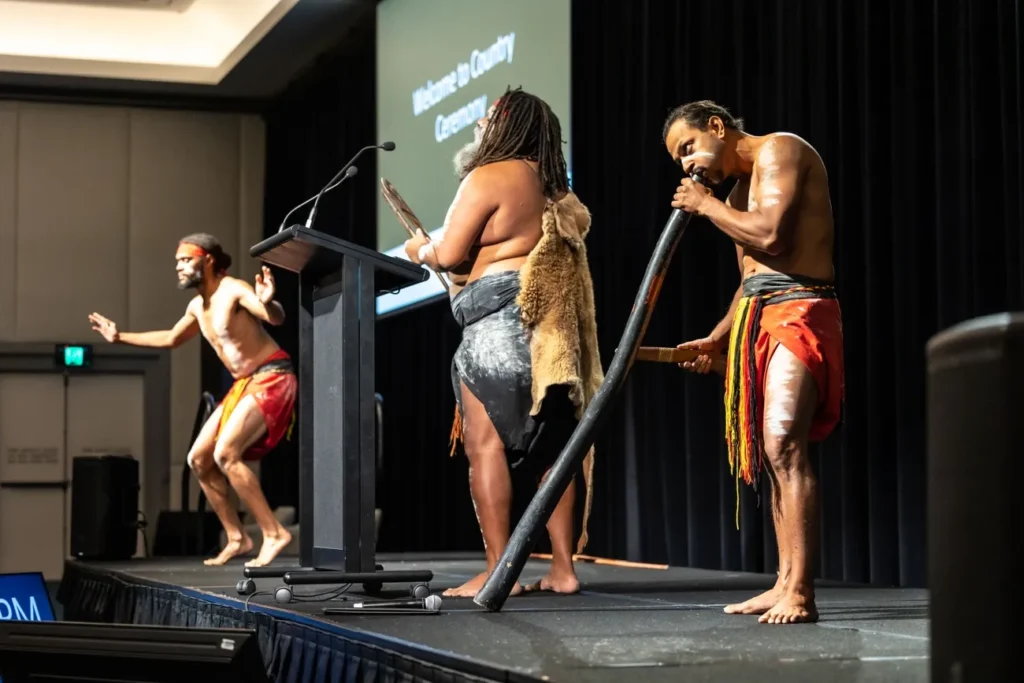
4. Welcome to Country
The Welcome to Country is part of long-held cultural protocols that grant permission for a person or group to enter onto the land. It takes place at the commencement or opening of an event and is delivered by a Traditional Owner of the land on which the event is being held, or by their designated representative. The ceremony may include music, singing, dancing, a smoking ceremony, and speeches.
- Always include a Welcome to Country at the opening of significant events, where practical.
- Book the Welcome through recognised Traditional Owners of the specific lands on which the event is taking place.
- For virtual and hybrid events, a Welcome to Country can still be delivered live or pre-recorded by a Traditional Owner. It is not automatically converted into an Acknowledgement of Country simply because the event is online.
5. Acknowledgement of Country
Where a Welcome to Country is not possible, an Acknowledgement of Country should be delivered instead. Unlike a Welcome, an Acknowledgement can be delivered by anyone, including non-Indigenous people, and demonstrates respect for the Traditional Owners of the land.
An example Acknowledgement:
“I would like to begin today by acknowledging the Traditional Owners of the land on which we meet and pay my respects to their Elders past and present. I extend that respect to any Aboriginal and Torres Strait Islander peoples here today.”
- Always include an Acknowledgement of Country at the start of each event day and, where appropriate, each session.
- Include the Acknowledgement of Country in your run sheet and MC or speaker notes so nothing gets missed on the day.
- For virtual or hybrid events, invite participants to share the traditional lands from which they are joining.
- Wherever possible, acknowledge the specific Traditional Owners and language groups of the lands on which your event takes place. A generic Acknowledgement is always a fallback, not the first choice.
6. Content warnings and cultural protocols
Trigger and content warnings should always be issued at the start of a session or discussion if the material could be distressing for some participants. This applies whenever you intend to share content involving Aboriginal and Torres Strait Islander people, particularly stories, images, or footage relating to trauma, dispossession, or lived experience.
For Aboriginal and Torres Strait Islander people, cultural protocols around Sorry Business include avoiding the use of the name, image, or voice of a person who has passed away, for a period of mourning that varies significantly between communities and language groups. When in doubt, seek guidance from a Traditional Owner or cultural advisor before including this kind of material in your programme. The disclaimer often used on Australian television, warning viewers that a programme may contain images and voices of Aboriginal and Torres Strait Islander people who have passed away, is drawn from exactly this protocol.

Making impact part of every event
Delivering successful and engaging events is what we do. Making a positive impact on the communities where our events take place, physical, virtual, or otherwise, is why we do it. Recognising, promoting, and celebrating cultural, social, disability, and gender inclusion is as much a measure of a great event as any post-event feedback score.
Since 2013, JTPM has delivered more than 1,200 events across Australia. Alongside that work, we continue to develop and use the JT Impact Checklist, a comprehensive and continually evolving list of more than 50 points of consideration covering environmental sustainability, gender equality, working with CALD communities, and First Nations inclusion.
For a broader look at how these principles fit into the whole event design process, read our post on diversity and inclusion considerations for events.
Ready to plan an event with real cultural impact?
If you would like your next event to deliver stronger social and cultural impact, our team at JTPM offers full-service event management in Melbourne and Australia-wide delivery, including corporate event management, conferences, community events, and JT Curation for premium, bespoke experiences.
Book a design session with us, or get in touch to start the conversation.