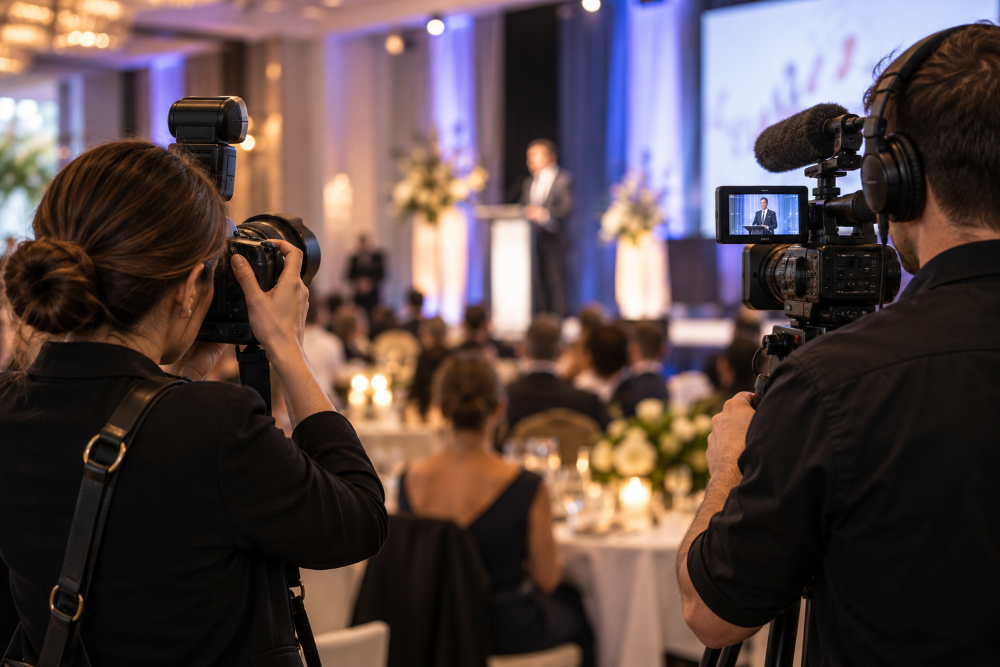
Event Photography vs Videography: What Event Organisers Should Book
Short answer: book both if your event is a one-off with a marketing life beyond the day itself. Book a photographer only if you need social and website content and can’t stretch the budget. Book a videographer only if the primary use is a highlight reel, testimonial, or a repeatable event where video assets carry more weight than stills.
Most Australian corporate, association, and government events benefit from both, but the reasoning matters when you’re building a content brief and a budget.
What event photography actually delivers
Event photography produces a library of stills you can use across every marketing channel for the next 12 months. A professional event photographer captures:
- Hero shots of the venue, stage, and branded moments
- Candid networking and delegate interaction
- Speaker portraits and podium coverage
- Sponsor and exhibitor booth activity
- Group photos and VIP moments
The output is a delivered gallery, usually within one to seven days, in high-resolution and web-ready formats. Stills are the workhorse of post-event content: LinkedIn recaps, sponsor reports, next year’s marketing collateral, website updates, and internal comms all draw from the photo library.
If you also want same-day photo sharing during the event, that’s a separate service. Real-time event photo delivery using platforms like SnapSync gets curated images to delegates and social channels within minutes rather than days.
What event videography actually delivers
Event videography produces motion content designed to tell the story of the event. A professional videographer captures:
- A highlight reel (60 to 120 seconds) that summarises the event
- Full-length keynote and session recordings
- Speaker testimonials and delegate vox pops
- Sponsor thank-you and activation content
- B-roll for future marketing use
The output is a mix of edited packages and raw footage, usually delivered over two to four weeks. Video assets have a longer production tail than photography, but they carry disproportionate weight when the goal is to sell next year’s event, attract sponsors, or communicate impact.
The core tradeoff
Photography and videography answer different marketing questions.
- Photography answers: what did this event look like?
- Videography answers: what did this event feel like, and why should you have been there?
Stills are cheaper, faster, and more versatile across channels. Video is more expensive, slower to deliver, and higher-impact for storytelling. Neither replaces the other.
When to book both
Book both when any of these apply:
- The event is a flagship (annual conference, major awards night, gala, launch)
- You need content to sell next year’s tickets or sponsorship
- The event includes keynote speakers whose recorded sessions have ongoing value
- Sponsors have committed to activation coverage as part of their deal
- The event has an impact story worth telling (fundraising outcomes, industry milestones, community moments)
Most Australian association conferences and corporate events fit at least three of these criteria. The uplift from booking both usually pays for itself in the following 12 months of marketing use.
When photography alone is enough
Book photography only when:
- The event is internal (staff training, quarterly briefing, private board dinner)
- Budget is genuinely capped and video wouldn’t be used
- The event is recurring frequently enough that video assets from an earlier edition are still usable
- The content need is short-term social and website coverage only
When video alone is enough
Rare, but valid when:
- The primary deliverable is a testimonial video or brand film
- The event is designed around video capture (a filmed panel, an interview series, a product launch built for hero content)
- Photography exists from a previous edition and doesn’t need refreshing
How to brief photo and video coverage
A clear brief is worth more than a bigger budget. Send the following before you book:
- Event date, venue, and run of show
- Priority moments (keynote, awards presentation, sponsor moments, VIP handshakes)
- Deliverable requirements (turnaround times, resolution, aspect ratios for socials, licensing)
- Any specific shots you must have
- Brand guidelines and any restrictions
If you’re not sure what to include, our post on how to brief a corporate event manager covers the same principles for a broader agency brief.
Booking event content coverage
JTPM delivers combined photography and videography as part of its event content services, including SnapSync real-time photo delivery for corporate events, conferences, and awards nights. Since 2013 we’ve captured content for more than 1,200 events across corporate, government, association, and not-for-profit clients.
If your next event needs coverage, book a design session or explore our event planning services Melbourne capability to see how content coverage fits into a full event package.
Frequently Asked Questions
Should you book a photographer or videographer for a corporate event?
Book both if the event is a flagship or if you need content to sell next year’s edition. Book photography only if budget is capped or the event is internal. Video alone is rare and usually only when the primary deliverable is a testimonial or brand film.
How much does event photography cost in Australia?
A professional event photographer for a full day typically costs between $1,500 and $3,500 depending on turnaround, licensing, and post-production. Half-day rates start lower. Same-day delivery or real-time sharing platforms sit at the higher end.
Can one person cover both photo and video?
Technically yes for small events, but the output quality drops on both sides. A single operator has to choose between framing a still and rolling video at any given moment. For events larger than 50 people or with a formal program, book separate specialists.
How long after an event are photos delivered?
Standard turnaround for a full gallery is three to seven days. Highlight selections for immediate social use are usually delivered within 24 to 48 hours. Same-day or real-time delivery is available with the right platform and workflow.
Do you need a videographer if the venue is livestreaming the event?
Yes, if you want edited highlight content. A livestream captures the session as it happened. A videographer captures the story, the crowd, the sponsor moments, and the b-roll that turns a livestream recording into shareable marketing content.