Event Marketing: Turning Moments Into Momentum
Good event marketing does more than fill seats. It shapes expectations, builds community before the doors open, and extends impact long after the last guest leaves.
Marketing is not a support act. It is the framework on which we build the experience.
Why event marketing matters
1. It builds meaning before arrival. Attendees arrive with a story already forming in their minds. Marketing sets the tone and helps people understand what to expect. This is especially powerful when you are introducing a new event, launching a new idea, or bringing diverse communities together for the first time.
2. It drives the right audience. Strategic messaging attracts participants who are aligned with the event’s purpose. That alignment translates into stronger engagement in the room, richer conversations between sessions, and better outcomes for sponsors and stakeholders.
3. It multiplies return on investment. Events are resource intensive. Marketing extends the lifespan of that investment. A single panel can become a series of social posts, a newsletter feature, a media story, and a digital footprint that keeps working for months after the event closes.
The four pillars of modern event marketing
Event marketing is most effective when all channels work together rather than in isolation. Each platform plays a distinct role in shaping awareness, engagement, and conversion. Together, they form an ecosystem that carries the audience from first impression through to lasting impact.
1. Social media
Social platforms build anticipation, document the experience in real time, and preserve its afterglow. Instagram, LinkedIn, and Facebook each play their own role across the campaign:
- Before the event. Teasers, behind-the-scenes preparation, speaker spotlights, and programme previews help audiences visualise the experience and understand its value.
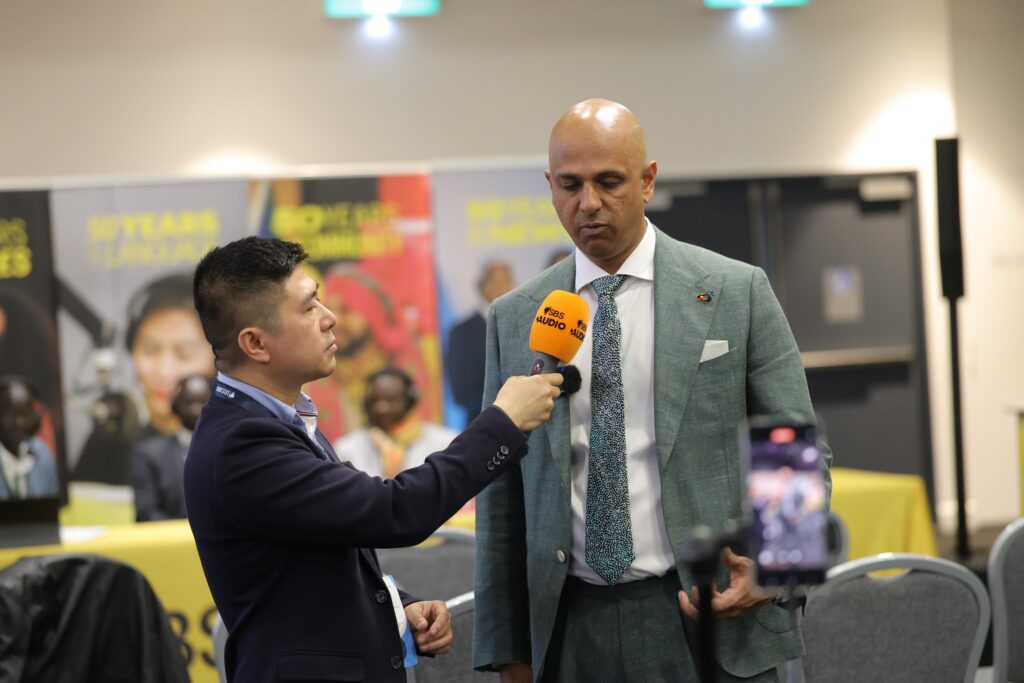
- During the event. Live content transforms attendees into co-creators. Real-time posts, short interviews, and audience reactions extend participation well beyond the venue walls.
- After the event. Highlights, insights, and reflections turn a one-day experience into an ongoing conversation.
Strong visual content is what sets a social campaign apart. If you are running a large event, a dedicated event photography and videography crew on the day is what makes the difference between generic phone footage and content that keeps working for months afterwards.
2. E-newsletters
Newsletters reach audiences in a more intentional space and allow for greater depth and context. A strong event newsletter will:
- explain why the event matters
- highlight speakers and themes
- share outcomes and insights
- reinforce brand voice and values
- invite participation at every stage of the journey
3. PR and media
Media coverage signals credibility, relevance, and impact. It positions events and organisers as contributors to industry and community dialogue. Effective event PR focuses on storytelling, not just promotion. Journalists and audiences respond to stories such as:
- industry shifts or emerging trends
- community impact
- innovation and firsts
- human stories that resonate beyond the sector
4. Website development and management
Your website is the central hub where information, storytelling, and conversion meet. A well-designed event website guides visitors through a clear journey from curiosity to commitment.
An effective event website should:
- communicate purpose and value clearly
- provide intuitive navigation for schedules, speakers, and registration
- reflect the event’s atmosphere through design and imagery
Ongoing management is equally important. Regular updates, fresh content, and clear calls to action keep the site active and relevant right through to the final registration deadline.
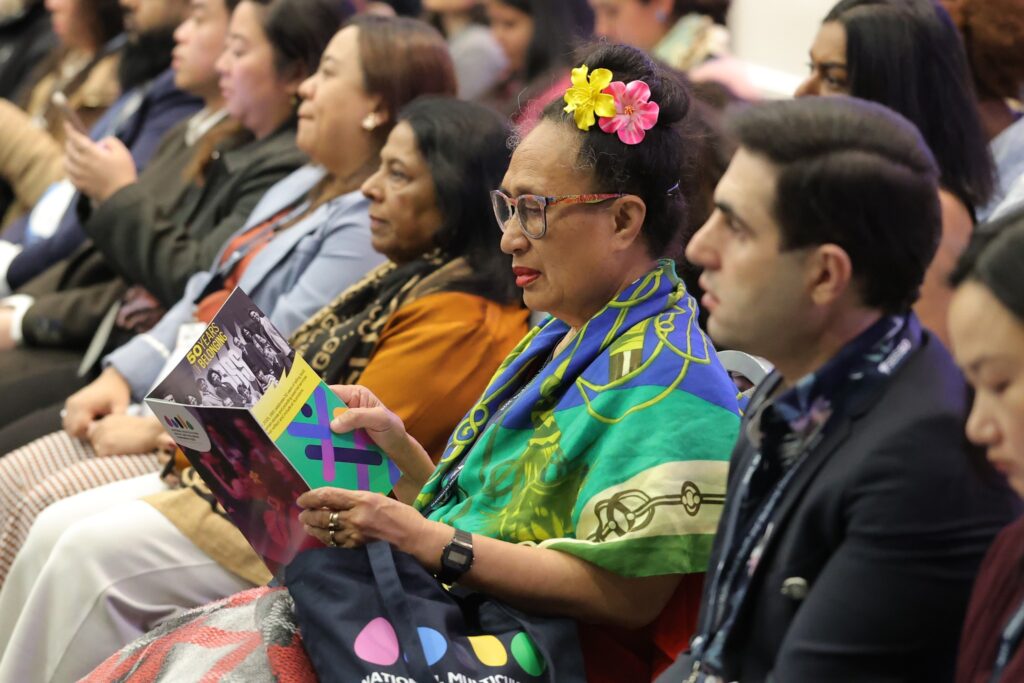
Mini Case Study:
2025 Multicultural Health and Wellbeing Conference (NMHWC)
The 2025 National Multicultural Health and Wellbeing Conference provides a practical example of integrated event marketing in action. Designed to bring together health professionals, policymakers and community leaders, the Conference required a strategic communications approach that would build awareness, support participation and extend the reach of key outcomes beyond the event itself.
Our marketing strategy combined social media, dedicated e-newsletters, targeted media engagement and a fully integrated event website to support audience growth, stakeholder engagement and knowledge sharing across the sector.
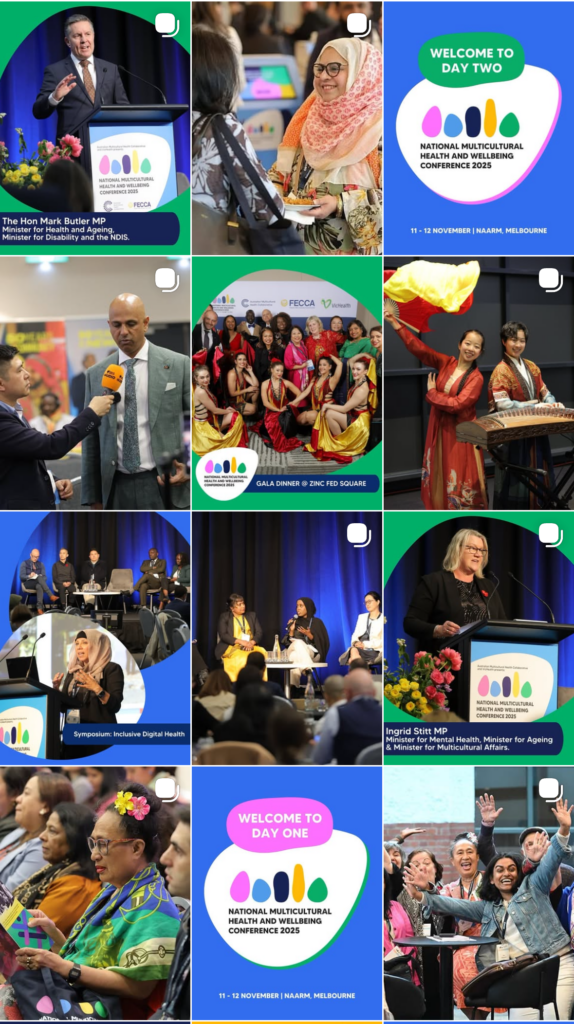
- Social Media:
The social media campaign for the NMHWC began six months earlier, in late May, and comprised of almost 50 individual pieces of content being designed, crafted and shared – including:
- 26 pre-event posts, reels and stories including speaker and session spotlights, venue and ticket information and important milestone reminders such as ‘Registrations Now Open’, ‘Abstract Submissions Now Open’, ‘One Month to go’ and ‘Last Chance to Register’ etc.
- 20 live posts, reels and stories, provided real time updates throughout the three days, keeping those who could not attend connected while providing quality content for attendees to reshare as part of their experience.
- 3 post-event reels and posts, to celebrate and provide a recap of the Conference, and to thank attendees, partners, speakers and suppliers for contributing to the success of the event.
The social media results:
- 100,000 audience reach/ impressions
- 3,052 link clicks to the Conference website
- 3,282 reactions (likes, comments, shares)
- E-Newsletters:
Twelve (12) branded Conference e-newsletters were also created and distributed between May and November, sharing event updates, speaker profiles, session details and key milestones and deadlines.
These newsletters were separate to the clients regular schedule of e-newsletters, helping to build brand awareness and trust for the Conference brand and purpose.
The results:
- 49.2% – Average Open Rate across all Conference e-newsletters
- 9.8% – Average Click Rate through to the Conference website (which we also developed and managed!)
- Media Releases:
We drafted and distributed three separate media release for the Conference including:
- Pre-event media release
- Two media releases on Day Two of the Conference to support the launch of two important initiatives which were announced at the conference:
- Vision 2030 launch
- Launch of the Australian Multicultural Women’s Alliance (AMWA)
The results:
- 50.8% Average Open Rate across all three media releases
- 13.2% Average Click Rate
- Interviews and articles appeared in key media outlets including many SBS Radio segments in various languages.
- Website development and management
We developed, designed and managed the NMHWC website, which included overseeing attendee registration and sales, the abstract submissions portal and process, sponsorship prospectus, program release and updates, speaker and session highlights and much more.
The future is integrated
The future of events is not a collection of services and messages operating independently. It is an integrated experience journey where marketing is woven into strategic planning and experience design from the outset, rather than bolted on as an afterthought. This principle is at the heart of how we approach every project, and it shapes the way we think about creating memorable event experiences from the very first design conversation.
Events create experiences. Marketing ensures the right people can discover, access, and engage with them.
Ready to build momentum for your next event?
If you are planning a conference, corporate function, gala, or launch, the JTPM Event Marketing team would love to help. As part of our full-service event management in Melbourne and Australia-wide offering, marketing sits alongside conferences, PCO services, and digital events as part of one integrated team.
Book a design session with us, or get in touch to start the conversation.